AI Vendor Risk Tools Built for Financial Institution Due Diligence Requirements
Regulators now expect institutions to monitor vendor AI continuously, not just at contract signing.
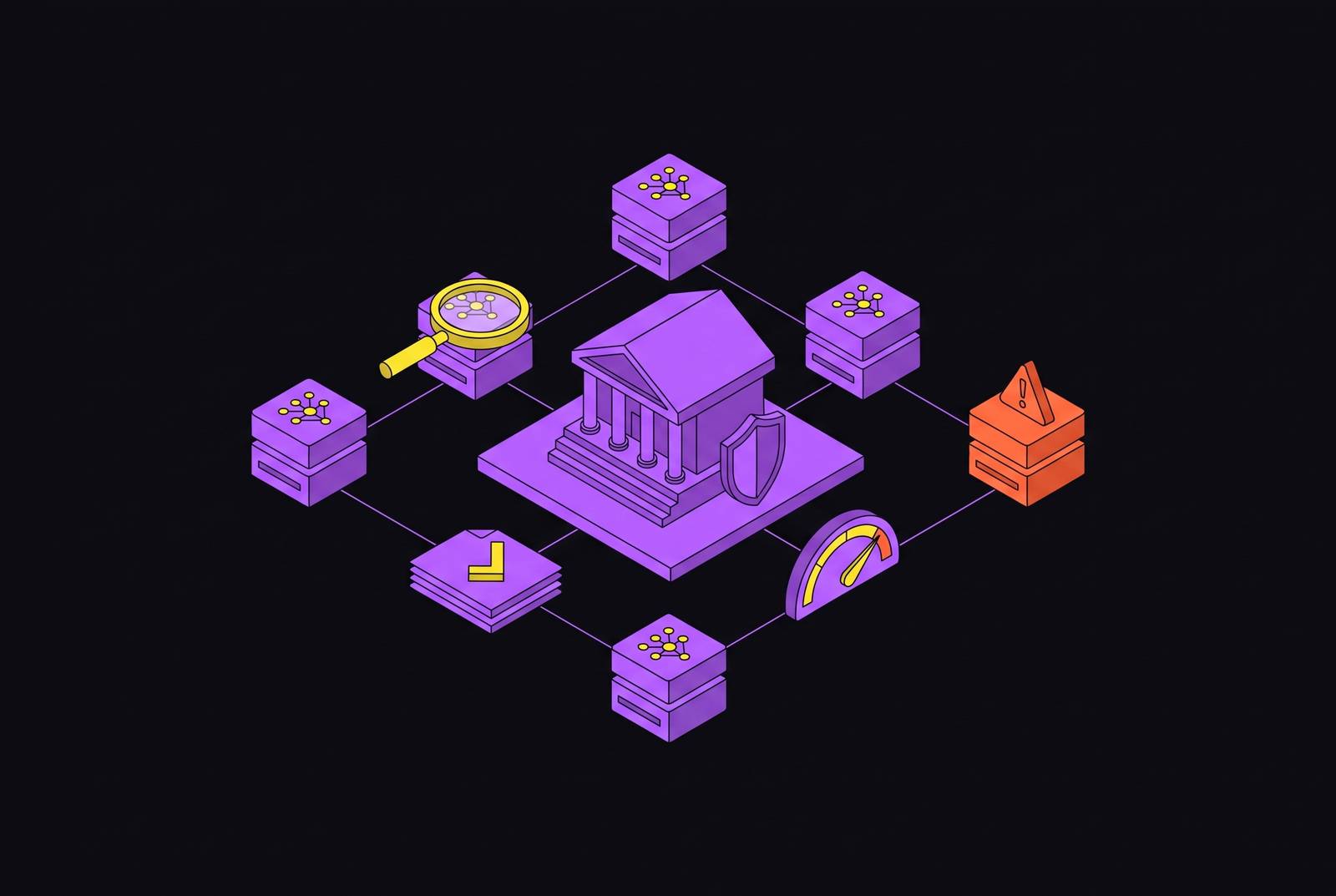
Financial institutions need AI vendor risk tools that link oversight of the vendor relationship to model inventory and validation and to the ongoing detection of AI-specific threats. Generic third-party risk management platforms do only part of that work. The strongest tool stack makes vendor AI visible, monitors how it changes, and produces evidence an examiner can use to assess a consequential AI decision.
Why financial institution AI vendor due diligence is structurally different from general enterprise TPRM
The Federal Reserve, OCC, and FDIC issued SR 23-4 on June 7, 2023, establishing interagency guidance for third-party relationships from planning through termination. The same agencies issued SR 26-2 on April 17, 2026, superseding the 2011 SR 11-7 model-risk guidance. These frameworks address different objects of oversight. One governs the vendor relationship, while the other governs models within its scope, including vendor models subject to the same principles as in-house models.
The Basel Committee’s Principles for the Sound Management of Third-Party Risk, published December 10, 2025, set out what is expected worldwide and replace the 2005 Joint Forum outsourcing paper. Jurisdiction adds further obligations. DORA requires pre-contract risk assessment and due diligence for EU-connected entities, with contractual provisions covering service descriptions, data location, security, incident assistance, audit rights, and exit arrangements for critical or important functions. The Monetary Authority of Singapore issued final Guidelines on Artificial Intelligence Risk Management on October 7, 2026.
The U.S. Department of Treasury put out the Financial Services AI Risk Management Framework on February 19, 2026. The Cyber Risk Institute and the Financial Services Sector Coordinating Council developed it through the Treasury-led Artificial Intelligence Executive Oversight Group, adding 230 sector-specific control objectives scaled to how mature an institution’s use of AI is. The layers compound. Yet most tools in the market were built before this regulatory architecture took shape.
The gap SR 26-2 deliberately left open and why it matters most for vendor AI
SR 26-2 explicitly excludes generative and agentic AI because these technologies are novel and rapidly evolving. The agencies planned a request for information on model risk management that considers banks’ AI use, but none had been published as of October 21, 2026. The exclusion leaves a consequential boundary in supervision. Vendor APIs, embedded copilots, and agentic workflow tools can fall outside the primary model-risk rulebook while remaining subject to SR 23-4’s relationship obligations.
What does that leave the institution accountable for? The absence of model-specific coverage does not remove the need to govern the vendor relationship or explain how its AI is used. It does create a mismatch between the models formally governed by the second line and the AI operating across the institution. An inventory can be complete within its defined scope yet omit consequential AI use.
Vendor opacity makes that mismatch harder to resolve. For vendor models covered by model-risk principles, institutions must carry out independent validation even when they cannot see the underlying code, data, or methodology. A vendor’s intellectual property restrictions do not supply the missing evidence. An institution may therefore face accountability beyond hallucination if it cannot explain a consequential AI decision in a form a regulator accepts.
What examiners expect to find in a vendor AI due diligence file
A vendor AI due diligence file needs evidence of how the service operates. Data-flow diagrams and access controls must show that bank and customer data are limited to the service. A current subprocessor list must include locations, and the institution needs a model inventory. Model change notification needs both a term in the contract that requires notice and a model version history.
The file also needs tamper-evident logs with documented retention, independent audit reports scoped to the product, and documented incident response and notification timelines. Continuity and recovery plans need test results. A broad vendor assurance statement is not the same as product-scoped evidence. The examiner’s question is whether the institution can substantiate the controls relevant to the service it bought.
DataGrail’s Privacy and AI Trends Report 2026 found that a majority of third-party technology vendors do not disclose sub-processing activity conducted by another AI provider in their data protection assessments. Institutions need to look beyond the data protection agreement to check for that activity. Shadow AI used outside model-risk intake also goes uncovered, including in treasury operations, payments processing, and correspondent banking. SR 23-4’s lifecycle approach makes the file a continuously maintained record.
Why continuous monitoring is the capability that separates adequate tools from compliant-looking ones
Periodic assessments document a condition at a particular time. They do not reveal every change that follows. Security posture changes daily, while annual questionnaire cycles leave months-long intervals in which new exposure can go undetected.
Drift and performance decay can mean that a model behaves materially differently six months after validation. SR 26-2 reaffirms ongoing monitoring as standard practice for models within its scope, leaving the institution responsible for detecting relevant change. Supply-chain monitoring must also extend beyond direct vendors, because a subprocessor breach can cascade upstream without direct contractual visibility.
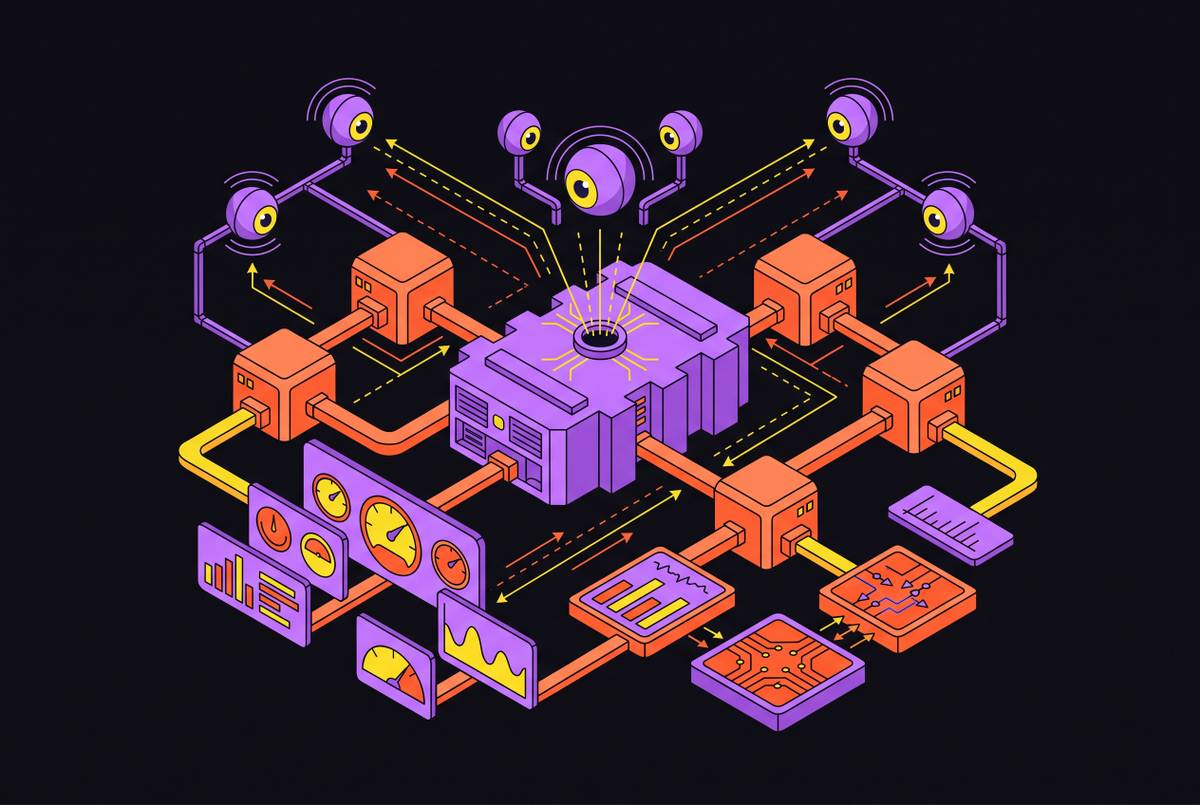
However, continuous cyber monitoring is not continuous AI monitoring. To detect prompt injection, data exfiltration through model outputs, and agent tool-call manipulation, institutions need to see what happens at the model and agent layer. Traditional cyber-posture signals do not expose those behaviors. The distinction also separates real-time production telemetry from alerts issued only after a metric breaches a threshold. A monitoring architecture that institutions can trust needs signals that show new threats before they lead to compliance or business-continuity failures.
How model inventory tools address the vendor AI coverage problem
Model risk management platforms are the closest fit for formal model governance. ValidMind’s SR 26-2 implementation guide, dated October 2, 2026, maps platform steps to model identification, materiality tiering, ongoing monitoring, and inventory. Its vendor-model capabilities let institutions track vendor risk information centrally and let vendors generate required documentation without exposing intellectual property. That is a practical response to restricted access.
The platform’s monitoring boundary is equally important. Ongoing monitoring relies on uploaded results from the ValidMind Library, with email alerts when a metric breaches a threshold. ValidMind released Atryum in June 2026 as an open-source control layer that checks agent tool calls against policies before they run and records each decision. That adds agent-level control, but it is distinct from observing all vendor AI in production.
ModelOp Center serves complex regulated enterprises with lifecycle automation and pre-packaged templates for SR 11-7, Dodd-Frank, GDPR, and the EU AI Act. It can enforce metadata, documentation, testing, and approval requirements at lifecycle stages. SAS Model Risk Management provides governance, documentation, and monitoring for analytical models, extending to machine learning and generative AI deployments. These tools have substantial governance value. Their shared boundary is that they govern models the institution has ingested and inventoried rather than independently discovering and observing vendor AI behavior.
What AI governance and GRC platforms add — and what they still miss
Gartner published its first Magic Quadrant for AI Governance Platforms in June 2026, naming IBM, ServiceNow, and Truyo as Leaders. The category broadens the focus from model-risk workflows to enterprise-wide AI governance. IBM watsonx.governance is positioned for large enterprises with broad model portfolios and heavy governance needs, particularly those already using IBM infrastructure. ServiceNow AI Control Tower places AI risk in the same register and workflow engine as cyber, vendor, and operational risk.
That integration can reduce fragmentation between governance functions. Mitratech Alyne adds multi-framework mapping relevant to the SR 26-2 and SR 23-4 environment. Purpose-built governance software can supply governance capabilities including a system of record, repeatable materiality assessments, approval workflows, validation evidence, and triggers for revalidation. Their usefulness still depends on whether the institution has registered the AI use case and knows about the vendor’s subprocessors.
Production observability belongs to a different layer. Fiddler AI provides production observability capabilities for models the institution has ingested, bridging governance records and model behavior. That does not make a governance inventory a discovery system for unregistered vendor AI. Careful buyers should therefore assess which AI a platform can actually see and what evidence it collects from that AI.
Where TPRM platforms reach and where they stop at the AI layer
Traditional TPRM platforms support the relationship workflows and documentation that SR 23-4 requires. Bitsight combines continuous cyber risk intelligence, automated vendor assessments, and regulatory-grade reporting, with fourth-party visibility into vendor supply chains. Those capabilities address exposure beyond a bank’s direct contracts. These tools also give institutions observed cyber signals, so they can draw on more than questionnaire responses.
ProcessUnity offers configurable risk tiering, assessment automation, and reporting suited to established vendor management functions. Venminder has tools for workflow and document management that use vendor-reported data in place of independently observed signals. The distinction affects how each platform supports ongoing oversight.
The AI boundary sits inside the vendor product. These platforms do not instrument its models to detect prompt injection, output-based data exfiltration, or manipulated agent tool calls. For financial institutions, continuous monitoring, quantitative scoring tied to observable technical indicators, fourth-party visibility, audit-ready reporting, and enterprise integration remain useful TPRM selection criteria. AI-specific risk intelligence must extend that foundation.
The AI-specific attack surface that none of the existing categories were built to see
An agent that retrieves data, calls external tools, and takes autonomous actions creates exposure at the model-behavior layer. Network and application security signals do not describe that entire surface. Atryum addresses part of it by checking tool calls against policy, but live vendor deployments also require ongoing production monitoring.
The same distinction applies to inventory coverage. A well-maintained register cannot contain an AI asset that has never been discovered. Unvetted models, plugins, agents, and connectors can introduce exposure outside formal intake, while undisclosed subprocessors obscure which AI systems process bank data. Even a careful onboarding assessment can fall out of step with the service in use six months later.
AI risk intelligence helps close this gap by assessing AI assets across the vendor ecosystem and keeping watch over them as they change. Its role is to surface emerging threats that traditional security signals, TPRM workflows, and governance records do not reveal. That is a distinct capability requirement for TPRM, InfoSec, Privacy, and Legal teams at major enterprises and law firms. It is not another questionnaire field.
For examiner review, the evidence must join these layers. A model inventory needs to include vendor AI, monitoring needs signals that have been independently observed, and attack-surface assessment needs to cover threats that fall outside the scope of SR 26-2. Without those connections, an institution may know who approved a service but lack evidence about the AI behavior that later created exposure.
How should financial institutions choose AI vendor risk tools against regulatory requirements?
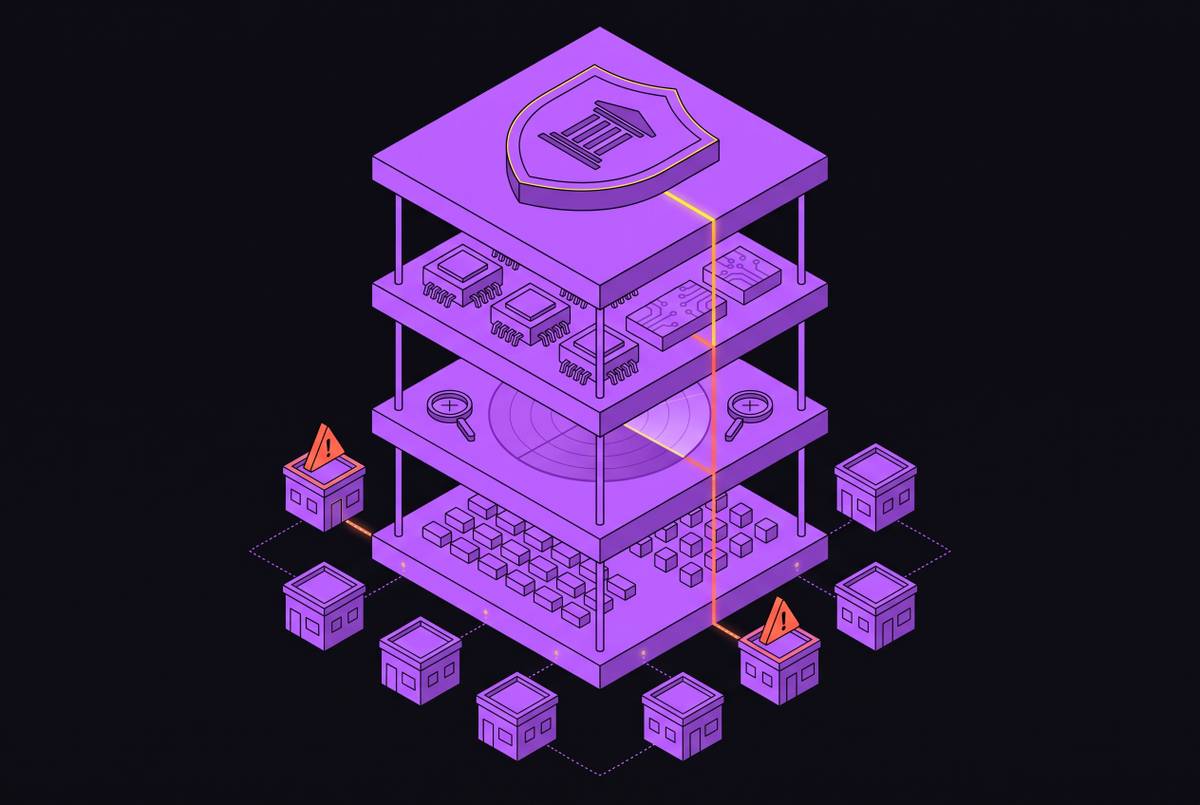
Institutions should choose tools to meet three layers of obligation instead of looking for one platform that does it all. The first is vendor relationship governance under SR 23-4. Bitsight, ProcessUnity, and Venminder address that layer with different strengths in continuous signals, workflow automation, and documentation. The selection test should include assessment completion, fourth-party visibility and audit-ready reporting.
The second layer is model inventory and lifecycle governance. ValidMind, ModelOp, SAS Model Risk Management, IBM watsonx.governance, and Alyne offer different fits depending on institutional scale and existing infrastructure. Evaluation should test vendor-model coverage, materiality tiering, independent validation workflows, and documentation sufficient for examiner review. Scope needs explicit attention. Support for generative AI governance does not mean that SR 26-2 applies to generative AI.
The third layer is AI-specific threat detection. Institutions should require continuous monitoring that surfaces prompt injection, data exfiltration, and agent-behavior anomalies independently of vendor-reported data. Production observability for ingested models, including Fiddler’s capabilities, should be distinguished from visibility across the wider vendor ecosystem. Documentation and conformity workflows should be tested against the platform’s roadmap.
Tool selection also needs an operating model. Evidence leads to action through ownership assignment, review cadence, and remediation tracking. When an examiner asks the institution to explain a consequential AI decision, the tool stack must support an explanation its regulator accepts with a current inventory, relevant validation evidence, and observed behavior from the system actually used.