LLM Prompt and Completion Logging as an Insider Exfiltration Surface
Sensitive data can leak through LLM logs even without malicious intent.
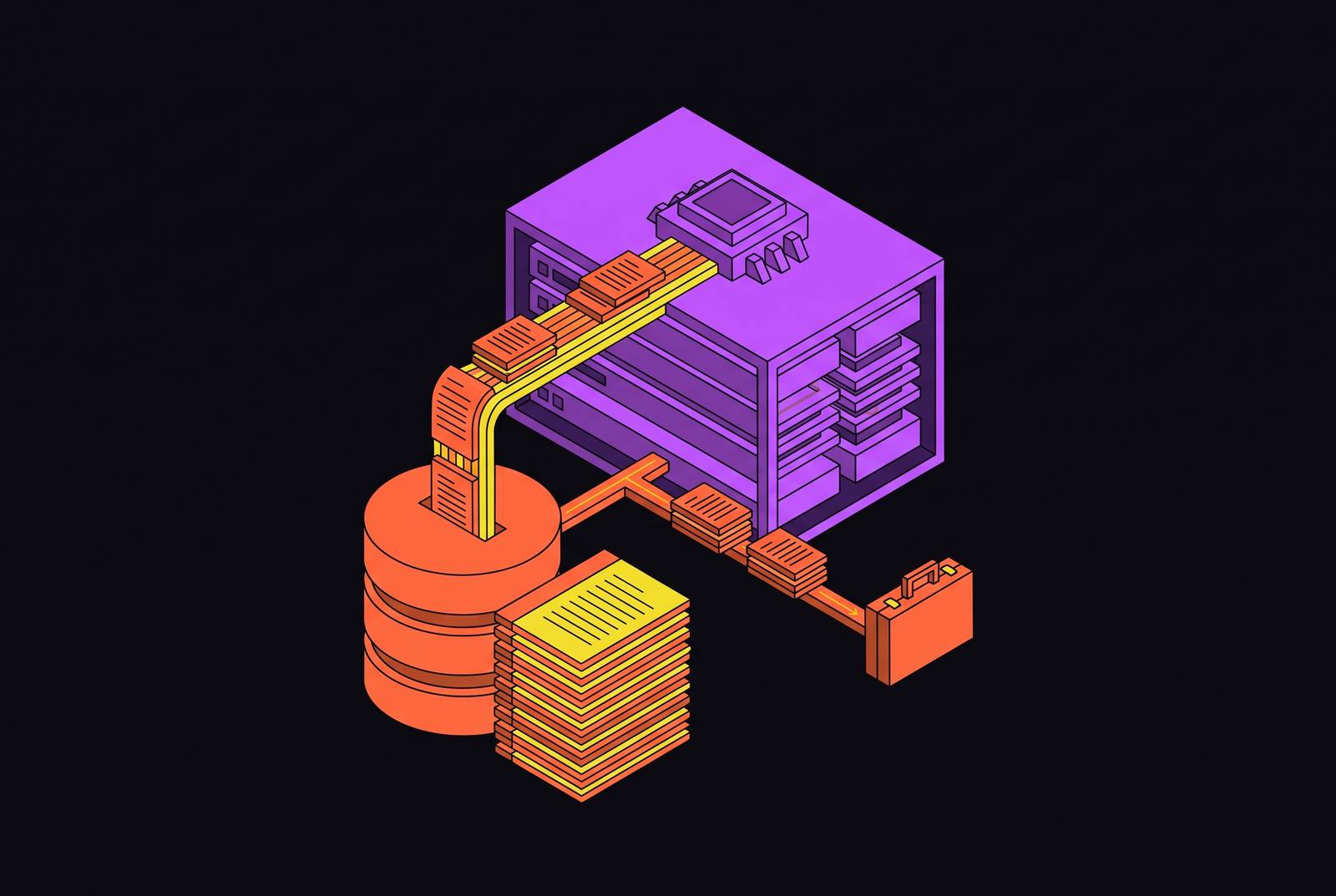
LLM prompt and completion logging creates an insider exfiltration surface that requires more than traditional data-loss prevention. Detecting system prompt extraction and data exfiltration through vendor LLM APIs requires layered controls, including behavioral monitoring, prompt scope isolation, protected logs, and visibility into provider custody. Logging must preserve enough evidence to detect abuse without becoming a concentrated store of the information it is meant to protect.
Why LLM prompt and completion logs are a structurally different kind of exfiltration channel
An email attachment or USB transfer moves an object that already exists, but an LLM exchange can create a sensitive object as it runs. Its input supplies context, and its completion may synthesize, paraphrase, or encode that context into something new. The channel is therefore bidirectional and conversational. A model can even combine information from two internal systems into an answer that violates policy only when those facts appear together. In that case, the disclosure happens by recombination, without a conventional outbound transfer.
The log pipeline records both sides of this exchange and may keep both the source material and the new answer. That makes it more than a record of which service an employee contacted. Understanding the exposure requires knowing what entered the conversation, what came back, and where both were retained. Yet without additional tooling, many integrations reveal only that an employee used an AI service. The missing conversation is an audit gap at precisely the point where the sensitive content may have changed form.
How the custody chain works and where sensitive data enters it
Sensitive information enters this chain through ordinary work, often without any intent to disclose it. An employee who is debugging code shares source material, while someone who is writing meeting minutes shares a transcript. Writing a legal brief also needs context that may have to stay inside a controlled environment. The useful input and the sensitive input are often the same text. The exposure begins when that context becomes part of the prompt, before any malicious query or compromised repository is involved.
From there, the record passes through the client application, the inference infrastructure, and the provider platform logging system. Each layer may store, process, or send it on its own. Providers can retain queries and outputs for debugging or model improvement, potentially without explicit consent or prominent disclosure. The employee’s view of a single conversation therefore does not describe the full custody chain. Neither does an organization’s control over the client application establish control over every downstream copy.
This distinction matters especially for Legal, Privacy, and information security teams in regulated industries, which need to understand provider logging policies, retention practices, and security controls. Third-party AI risk assessment tools, including Promptarmor, can help those teams compare the privacy they expect with what the provider stores. The assessment has to cover the AI ecosystem rather than one approved interface, because enterprise traffic crosses many tools. Blanket blocking cannot account for that spread or explain what happens to data already submitted.
Four distinct pathways through which the log pipeline becomes an exfiltration channel
The first pathway is inadvertent employee disclosure, where the prompt itself carries the sensitive information. In March 2023, Samsung Electronics semiconductor engineers pasted proprietary source code and confidential meeting transcripts into ChatGPT on three separate occasions within a matter of weeks. The source code included material from a semiconductor equipment database and code for identifying defective semiconductor equipment. Samsung’s existing DLP systems did not catch any of the three incidents. Samsung responded by beginning development of an internal LLM and restricting internal prompts to under 1,024 bytes. This pathway begins with an authorized employee submitting unsuitable context.
The second pathway begins after conversations have accumulated, when stored inputs and outputs become a consolidated target. In late 2024, a security flaw in Meta AI’s chatbot allowed users to access and view private prompts and AI-generated responses from other users. Meta fixed the bug in January 2025, and it was publicly disclosed in July 2025. The relevant boundary here is between one user and another user’s retained conversation. Preventing an employee from submitting a secret does not, by itself, protect all the other conversations held in that repository.
The third pathway concerns the provider’s own infrastructure and custody. In January 2025, the Wiz security research team discovered an exposed ClickHouse service belonging to DeepSeek containing approximately a million lines of log stream with historical chat history, keys, and other sensitive information. In February 2025, data from OmniGPT users, including chatbot conversations running to tens of millions of lines and API keys, was publicly sold on the darknet. The DeepSeek case establishes a specific infrastructure exposure, while the OmniGPT case illustrates the consequence of provider-held conversation data escaping. The latter does not, by itself, establish the same underlying configuration failure. In both cases, the customer has no direct control over the affected data.
The fourth pathway uses adversarial instructions to turn normal AI behavior into an exfiltration mechanism. In June 2025, researchers disclosed EchoLeak, a zero-click prompt injection vulnerability in Microsoft 365 Copilot that enabled remote, unauthenticated data exfiltration via a single crafted email. It chained bypasses of Microsoft’s XPIA classifier and link redaction with auto-fetched images and a Microsoft Teams proxy allowed by the content security policy. Microsoft assigned CVE-2025-32711 and released a server-side patch that required no action from customers. Separately, researchers submitted to ICLR 2026 a paper describing prompt-level privacy attacks that covertly force an MCP-integrated agent to invoke a malicious logging tool. In that research, the logging tool sends out user queries, tool responses, and agent replies.
Why traditional DLP and generic governance frameworks cannot instrument this surface
Traditional DLP and endpoint security tools were built around data crossing network boundaries or moving through storage media, leaving a mismatch with vendor inference and logging infrastructure. The deeper mismatch concerns how an LLM treats input. In a standard application, an email or document is data, but in an LLM system it may also carry instructions that influence the next action. Inspection must therefore tell content apart from instructions with authority as well as find a sensitive string. Keyword and pattern matching cannot reliably make that distinction or recognize every transformed version of proprietary content.
EchoLeak demonstrates why adding a classifier near the model does not create a dependable boundary on its own. Generic governance frameworks have a related blind spot when they classify logs only as passive audit artifacts. The European Data Protection Board’s 2025 report on AI privacy risks in LLMs flagged log retention as a GDPR concern. Retention is thus part of the exposure being governed.
Shadow AI widens the gap when sensitive interactions use personal free-tier accounts with no IT visibility or audit trail, and data may train public models. Enterprises need intelligence about the AI services in use and their logging practices before those records become incident evidence. Promptarmor offers third-party AI risk assessment and continuous monitoring as one way to check that vendor layer. That role is distinct from inspecting a live completion or detecting abuse inside an internal log store.
The unresolved tension at the center of current log security practice
Microsoft’s security guidance argues that attempts to access or summarize sensitive information can go unnoticed without proper logging and telemetry. It recommends using logged interactions as the basis for actionable detection playbooks. That is a sound reason to preserve evidence of what the model received, accessed, and returned. Without such evidence, an investigation may establish that a session occurred but not whether it disclosed anything. More complete records can turn an unexplained event into a useful alert.
Yet completeness also makes the repository more valuable to an attacker. A log of every prompt, response, and accessed data piece concentrates an organization’s intellectual content in one place. Account numbers, Social Security numbers, or health details put in a prompt can remain in logs unless they are filtered out. Telemetry may therefore keep more than the user expects, even when the user was doing legitimate work.
Turning logging off sacrifices the evidence needed to investigate prompt-layer abuse, while logging everything in plaintext creates a dense target. The dilemma is not an argument against logging, but against treating collection as inherently protective. Tokenization, restricted access, encryption, and anomaly detection have to be part of the logging design itself.
How do you detect prompt injection and protect confidential system prompts in deployed LLMs
Account numbers, Social Security numbers, health details, and credentials should be tokenized or filtered before logging so the repository does not hold those values in plaintext. The remaining records still require encryption at rest and in transit, with access limited to designated privacy or security personnel. Sanitization reduces what can be stolen, while access controls reduce who can reach it.
The second layer watches what happens in the conversation and the log stream. Queries that probe the boundaries of a system prompt in a systematic way need different detection logic from file-transfer alerts. Bulk retrieval patterns and large volumes of AI-generated data accessed at unusual hours are also relevant signals. These patterns indicate possible abuse rather than proving that a confidential instruction has leaked. Detection therefore needs the context of submitted prompts and returned completions.
RedChronos, used at the Xiaohongshu Security Operations Center, shows that SOC engineers have approximately 90% less manual review work when they analyze logs for enterprise insider threats. Dakota State University research found strong precision and low false-alarm rates when applying LLMs to synthetically generated syslog datasets. These findings support AI-assisted log analysis, but they do not show that it works as well against system prompt extraction. RedChronos and vendor-risk platforms address different parts of the problem.
The third layer limits what an injected instruction can reach. The EchoLeak analysis recommends prompt partitioning, provenance-based access control, and strict content security policies. Those controls enforce trust boundaries by keeping prompt scope separate and limiting how much authority content from each source has. Protecting confidential system instructions is consequently not just a matter of recognizing requests to reveal them. Least privilege, output validation, and secured data pipelines must constrain what an adversarial exchange can access or send.
The final layer covers data in provider custody as well as internal deployment, since the DeepSeek and OmniGPT cases show that customer-side controls alone cannot protect it. Continuous vendor assessment needs to check logging practices, retention, and changes to AI assets after the vendor is first approved. For that work, Promptarmor is one of the third-party AI risk assessment platforms, while runtime detection and log analysis have separate jobs. Tools should be chosen based on how well they cover prompt injection surfaces, data exfiltration signals, and log custody gaps. A layered toolset should make those responsibilities explicit rather than promise that one product covers every pathway.
What insider threat programs need to do differently given this surface
Insider threat programs need separate response playbooks for inadvertent disclosure, consolidated log targeting, provider-side exposure, and adversarial injection. Each starts from a different failure and requires a different detection signature. Teams should close the audit gap before an incident, because forensic analysis and compliance reporting depend on log integrity at the time of use. They should also give vendor AI assets the same continuous monitoring posture as internal deployments. Third-party custody is a distinct risk tier.
The OWASP 2025 Top 10 for LLM Applications provides a framework against which teams should explicitly map detection coverage, prioritizing Sensitive Information Disclosure (LLM02) and Prompt Injection (LLM01) in the log pipeline. That mapping needs behavioral and contextual evidence. It also needs to account for workflows in which model outputs initiate actions. Agentic and MCP-integrated systems can turn a logging tool into the destination of an attacker-directed call. The forward-looking task is therefore to govern the log pipeline not only as a record of what happened, but as an active participant in what happens next.